Direct investment · Tax-optimised · Fully supported
Taxes that create real assets.
Helios Capital arranges direct investments in battery storage and solar PV projects in Germany — structured under §7g EStG (German Income Tax Act), fully documented, and supported across the entire holding period.
¹ Example calculation: 60–75 % debt financing, §7g EStG (IAB + Sonder-AfA) at top marginal tax rate. Actual impact varies — please verify with your tax advisor.
² Revenues from EEG feed-in tariff or long-term PPA. Actual returns depend on market conditions — direct participations carry risk of loss.
01Why now
The energy transition is looking for owners.
The coal phase-out by 2030, rising electricity demand, and the rapid build-out of variable renewables make storage and solar the key assets of the next decade.
At the same time, German law — through §7g EStG (Investitionsabzugsbetrag plus Sonder-AfA) and regular depreciation under §7 EStG — grants these investments unusually favourable tax treatment.
02Why Helios
Matchmaker and long-term partner.
Full transparency: site, technology, permits, revenue model, financing structure and sensitivities — all documents are made fully available and explained in detail.
Direct participation in the real asset — no fund wrapper, no intermediary structures.
Support across the entire holding period and beyond: reporting, account management, technical and tax service. We don't just arrange the deal — we remain your point of contact.
Clear fee structure: brokerage commission plus an ongoing service and asset-management fee, fully disclosed before signing.
Tax levers available to entrepreneurial investors — structured together with your tax advisor or our partner firm.
03How it works
From the first conversation to the last day of operation.
01
Initial conversation
We understand your tax situation, your investment volume and your objectives — in 30 minutes, free of charge and without obligation.
l
02
Project selection & full transparency
We present curated projects with all documentation: site, technology, permits, revenue model, financing, sensitivities, scenarios. We explain every position in detail until every question is answered.
r
03
Tax structuring
Together with your tax advisor — or our partner firms — we structure the IAB (§7g (1)), Sonder-AfA (§7g (5)), regular AfA (§7 (1) / (2)) and financing.
l
04
Long-term support
We remain your point of contact across the entire holding period and beyond — ongoing distributions, quarterly reporting, account management, technical and tax service. Your capital works without stress for you.
r
04Tax benefits
Four levers, combined.
The Investitionsabzugsbetrag (§7g (1) EStG — investment deduction allowance) lets you deduct up to 50 % of the planned investment from taxable profits in the three years before purchase. In the year of acquisition, Sonder-AfA (§7g (5) EStG — special depreciation, up to 40 % cumulative over five years) is added on top.
Regular depreciation under §7 EStG runs in parallel — either straight-line over the useful life (~20 years, 5 % p.a.) or declining-balance under §7 (2) EStG, typically at 15 % of the residual book value for solar PV assets.
Note: This example is for illustration only. Not tax or investment advice. Concrete structuring requires a tax advisor.
IAB + Sonder-AfA + declining-balance AfA year 1, simplified
€110,438
(36.8 % of investment volume)
—
Important note. This example calculation is for illustration only and is neither tax nor investment advice. Actual amounts depend on project data, the chosen AfA method (straight-line or declining-balance), financing structure and your individual tax situation, and must be confirmed with a tax advisor. Direct investments are entrepreneurial holdings with risk of total loss.
Effective EK outlay
Illustrative only
How much additional equity is needed?
Bank financing and the tax refund in the year of acquisition cover most of it — only a small portion needs to be contributed as additional equity.
Total investment
€300,000
Debt€210,000
Bank financing70 %
IAB tax refund€71,250
§7g (1) EStG, year 023.8 %
Additional equity€18,750
beyond tax refund6.3 %
70 %
60 %Typical for secured renewable assets: 65–75 %80 %
How the IAB tax refund is derived
€150,000
IAB base
×
47.5 %
Marginal tax rate
=
€71,250
Cash year 0
IAB base = 50 % of the investment volume. Marginal tax rate = 45 % top rate (Reichensteuersatz) + 5.5 % solidarity surcharge (applies from ca. €278,000 taxable income).
Additional equity
to be contributed beyond the tax refund
€18,750
(6.3 % of investment)
—
Reflects only the IAB (§7g (1) EStG) as the cash event in the year of acquisition. Sonder-AfA and regular AfA only take effect in subsequent years and reduce the equity outlay further later on — intentionally not included here.
05Asset classes
Three ways to participate in Germany's energy infrastructure.
BESS
Battery storage
Large-scale Battery Energy Storage Systems earn revenue on the day-ahead, intraday and balancing markets. A growing market, driven by the build-out of variable renewables.
Large utility-scale ground-mounted solar PV with EEG feed-in tariff or PPA. A classic real-asset structure with long duration — newly attractive thanks to falling module prices.
·EEG feed-in tariff or Power Purchase Agreement
·Low operating costs, long predictable lifetimes
·Combinable with §7g IAB and Sonder-AfA
Hybrid
Co-located hybrid
Solar PV + storage at the same grid connection point. Reduces curtailment during negative power prices and raises the utilisation of grid capacity.
·Lower exposure to negative prices
·Higher utilisation of the grid connection
·Diversified revenue structure
"We're building Helios Capital because the next generation of German wealth will be created not in real estate but in energy infrastructure — and because affluent investors deserve a partner who doesn't just arrange the deal, but stays with them for a lifetime."
Leon Heinrich
Co-Founder · Helios Capital
06Partners & structuring
We work with established firms.
Every investment is structured together with experienced tax and energy-law firms and seasoned asset managers. This ensures each position is sound from a tax, legal and operational perspective.
If you wish, we work alongside your existing advisors — or refer you to our partners for a fully managed structuring process.
07Who we are
Trust is the most important asset class.
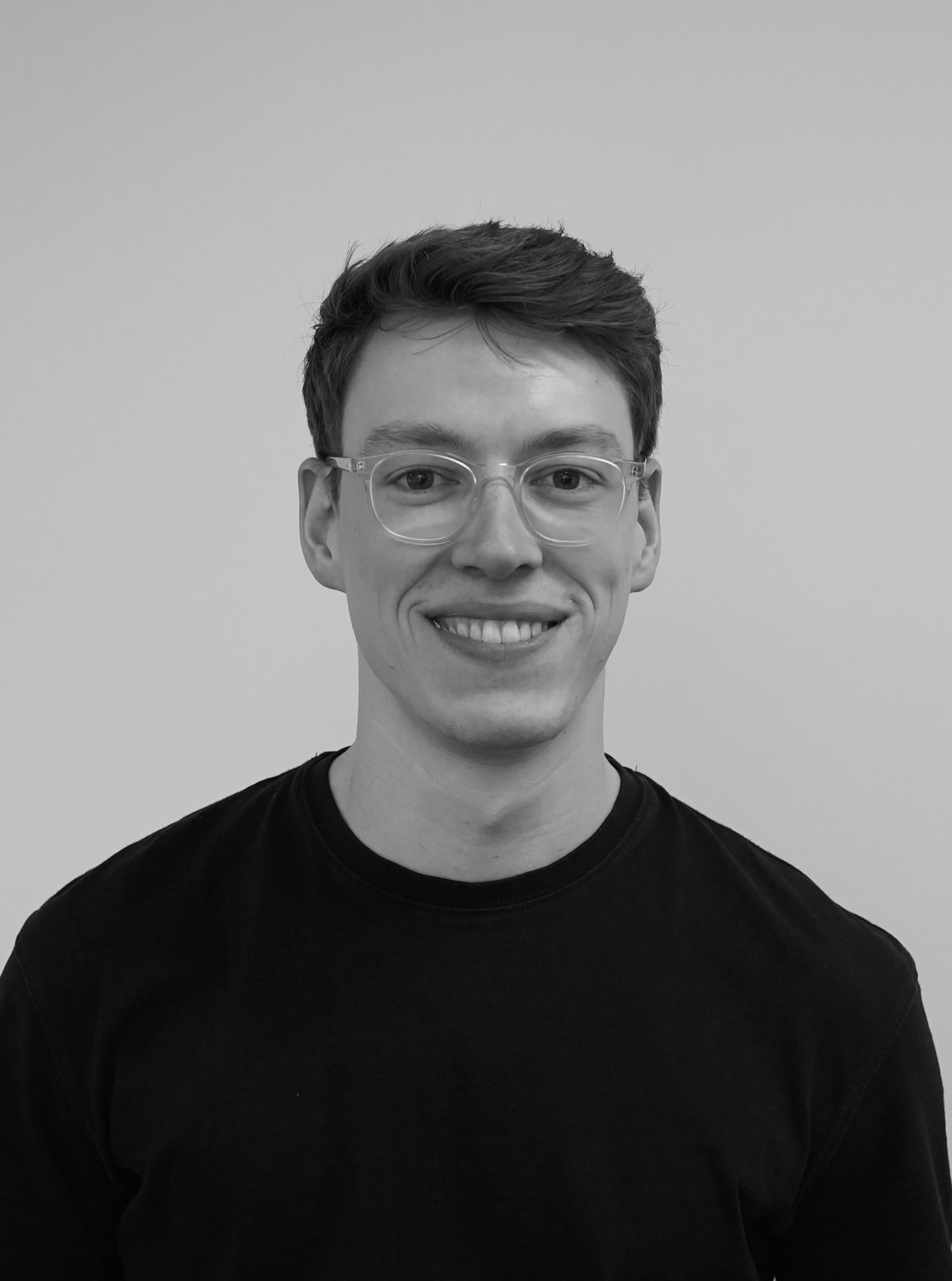
Leon Heinrich
Managing Director & Co-Founder
Experienced startup operator — highly analytical, dives deep into the numbers and does whatever it takes to deliver attractive returns for investors. Drives Helios with a focus on smart sourcing and, above all, rigorous evaluation of projects — so only the strongest make it into the portfolio.
08Frequently asked
What investors most often want to know.
What level of income makes a direct investment worthwhile?
The structure becomes worthwhile from an annual taxable income of roughly €120,000–150,000 — at that level you are reliably in the top tax bracket (45 %+), so the IAB and Sonder-AfA can fully unfold their effect. The equity actually required is significantly lower than the nominal investment volume: a substantial part is carried by the early tax refunds from the IAB. Typical project investments start at around €100,000 in volume.
How does this compare to a tax-advantaged real-estate investment?
Real estate has long been the default tax shelter for German private investors — but the math has shifted. Denkmal-AfA and Sonder-AfA on Neubau are volume-capped and supply-constrained, residential yields in attractive locations have compressed below 3 %, and the operating burden (tenancy law, maintenance, regulatory exposure) keeps growing. A PV or BESS direct investment delivers a comparable real-asset profile with materially stronger tax levers in the early years — IAB plus Sonder-AfA easily exceed 70 % of the investment amount in deductions — alongside a clearly bounded technical risk profile and revenues tied to a structurally growing market (Energiewende, electrification of mobility and heat). Most of our clients arrive having already built a real-estate position and view Helios as the natural next allocation.
How does the Investitionsabzugsbetrag (IAB) under §7g EStG work?
You can deduct up to 50 % of the planned investment amount from taxable profits in the three years before purchase. In the year of acquisition, Sonder-AfA (§7g (5) EStG, up to 40 % cumulative over 5 years) and straight-line or declining-balance AfA (§7 (1) or (2) EStG) are added on top.
What returns are realistic?
Returns depend on project site, revenue model, financing structure and your individual tax situation. In every initial conversation we walk through the sensitivity calculation for the specific project across three scenarios (best / mid / worst). Because these are entrepreneurial investments, we do not make return promises.
How does the investment protect against inflation?
Three structural levers. First, you own a real asset — the physical PV or storage installation — whose replacement cost rises with inflation. Second, revenue is tied to electricity prices: PPAs are typically index-linked, and the merchant portion participates directly in market price movements. Third, project debt is usually fixed-rate over 10–20 years, so inflation erodes the real debt burden while revenues adjust upward. The combination has historically made energy infrastructure one of the more reliable inflation hedges among real-asset classes.
Does Helios only accompany me up to signing?
No — and that is a key difference. We remain your point of contact across the entire holding period and beyond. This includes quarterly reporting, account management, technical and tax service. The goal is for your capital to work — without stress for you.
What's the difference between Helios and a classic fund?
You participate directly in the real asset — not in a fund wrapper. That means: no fund management layers between you and the asset, full tax levers as an entrepreneurial investor, and immediate impact of project performance on your position.
What real-world impact does my investment have?
Every project we broker comes with a measurable impact profile: annual MWh produced or stored, tons of CO₂ avoided versus the German grid mix, and the household equivalent the asset powers or stabilizes. A mid-sized rooftop PV project of around €500,000 typically avoids 150–200 t CO₂ per year over a 20-year lifetime — roughly 3,500 tons cumulative, the lifetime emissions of dozens of households. You receive this data in your quarterly reporting alongside the financial figures, so the impact is auditable, not aspirational.
What does working with Helios Capital cost?
The initial conversation is free of charge. For the brokerage we charge a commission on the purchase price; for ongoing support of your investment we charge a service and asset-management fee. All terms are disclosed transparently before signing.
What risks exist?
Direct investments are entrepreneurial holdings with risk of total loss. The relevant risks are in particular: power-price and market risk, technical risk (availability), financing risk and regulatory risk. We address these structurally — through co-located structures, established direct marketers, insurance and standard contracts — but we cannot eliminate them.
How quickly can I invest?
From the first conversation to signing typically takes 6–10 weeks. To make use of the IAB in the current tax year, we work to a compressed timeline on request.
Want to dig deeper? Find background on taxes, markets and direct investments in our knowledge section.
30 minutes. Find out if it fits.
Free, no-obligation initial conversation. We understand your situation and show which projects and tax strategies fit you — or whether today is (not yet) the right moment.